scroll down below narrative to see more images
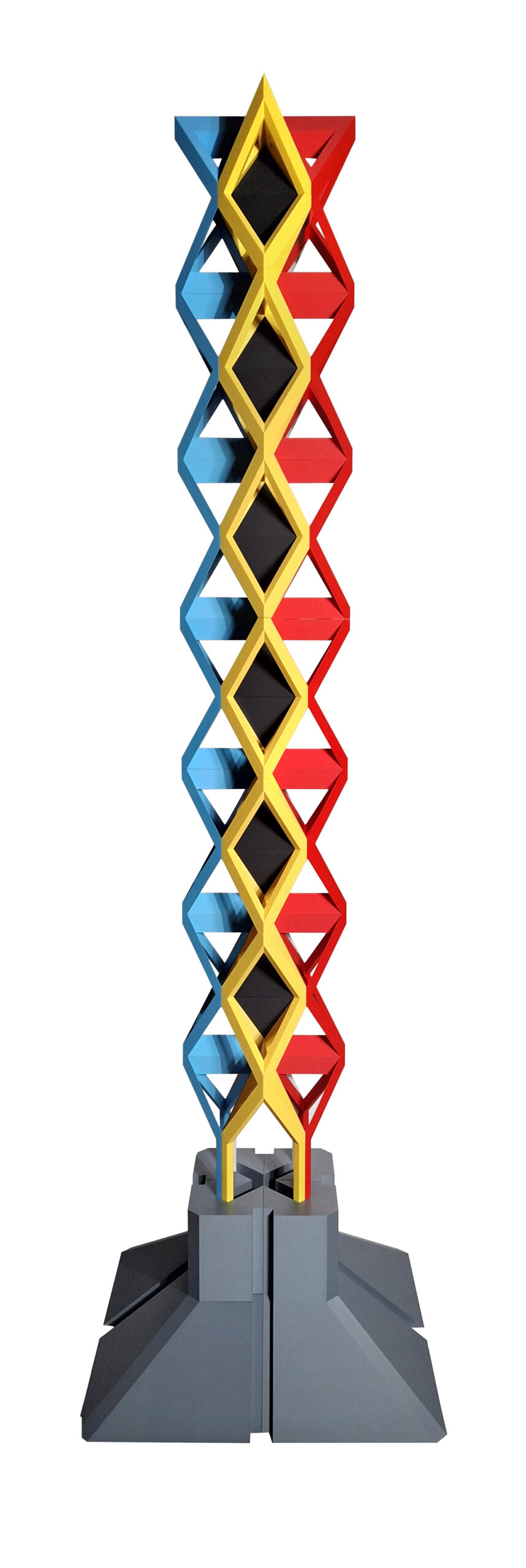
EIDOS TOWER is Art-itecture.
Eidos is the Greek term used by Plato and Aristotle, signifying the “form,” “shape,” “essence,” or “true nature” of a thing.
Designing this tower was inspired by Brancusi’s monumental Endless Column, one of an ensemble of 3 sculptures (1937-1938) for his World War I memorial in Târgu-Jiu, Romania. In one of my architecture studio classes at Pratt, my professor Hanford Yang, encouraged me to tap into relationships outside of core architectural theory, particularly the visual arts by visiting the great art institutions that New York City had to offer. He said that we had a privilege to be able to study architecture in such a laboratory of art and architecture as New York. I got student passes for the Met, Moma and the Whitney and visited them often. This exposure helped me explore a more emotional aspect of form making. Architecture was more than the function of a building. You could also tell a story and evoke spiritual engagement. I saw sculptures of Brancusi at Moma at one of these visits. I didn’t know anything about him or his work before this. I went to the library to learn more about him and that is where I saw his endless column, a construct of stacked rhomboidal shaped modules of cast iron coated with brass and zinc and structurally supported by a steel inner spine. I have a spine disease and in my early 20s my spine which had progressively began to curve starting in adolescence was causing me pain and looking back in hindsight the proud straightness and spine like quality of the endless column was perhaps why it so resonated with me.
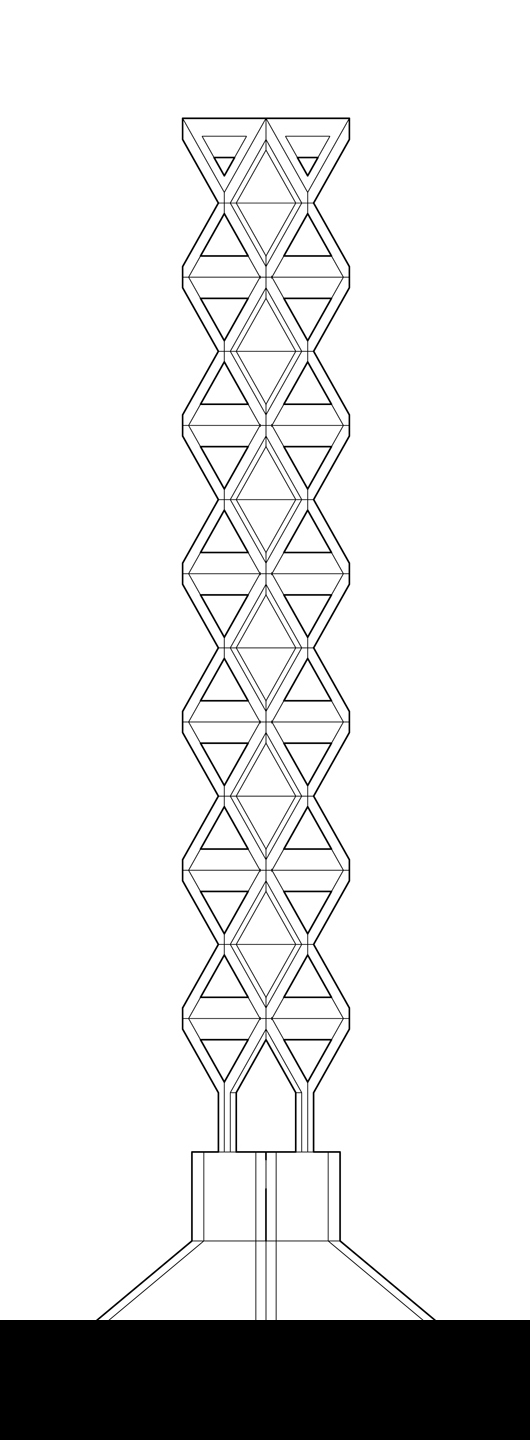
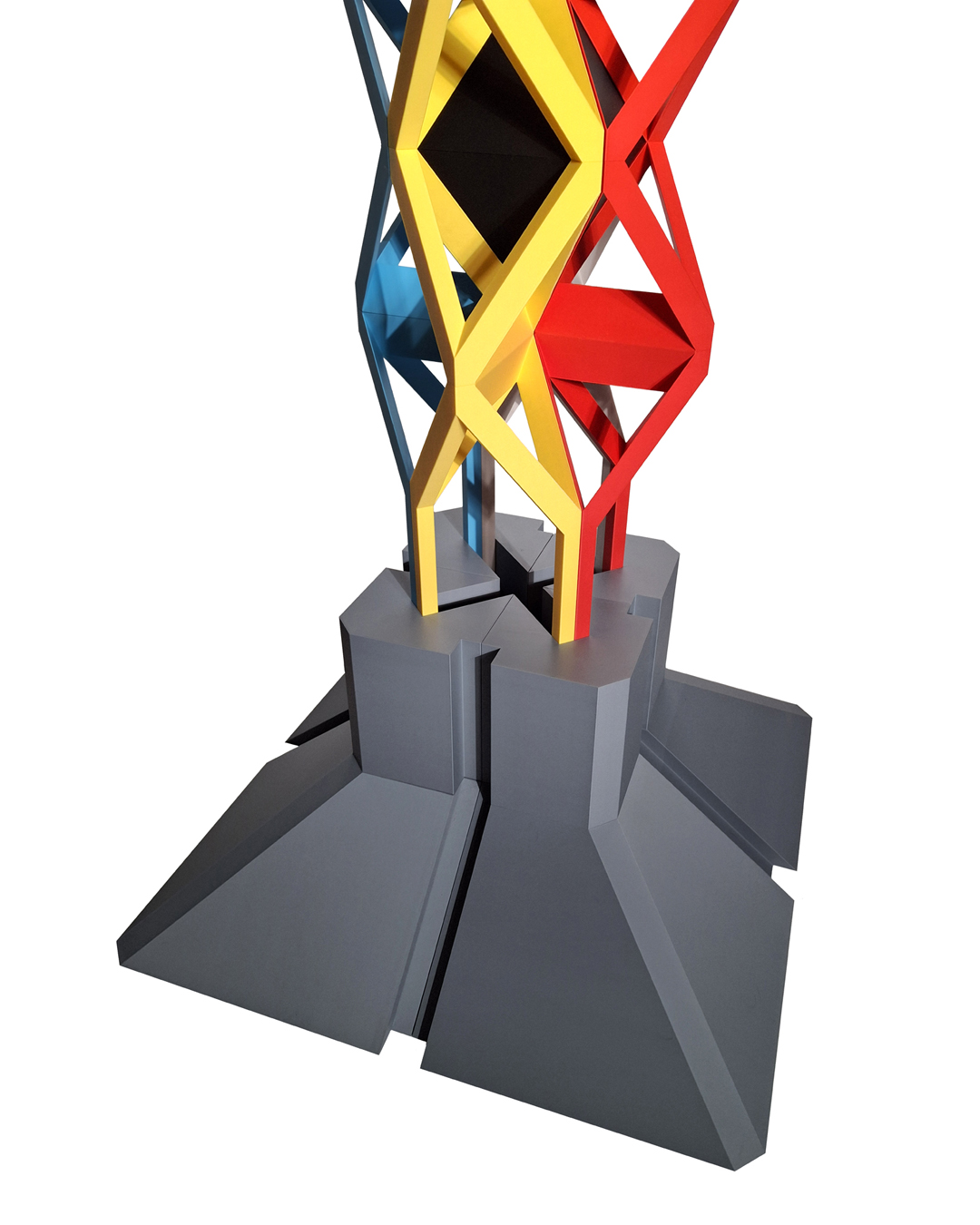
In my interpretation I have inverted the rhomboid. A rhombus, split into two folded triangles is the master module that forms the tower. Four of these modules combined together form a level. Mirroring one of these levels forms 4 inverted rhomboids, that is, instead of projecting out like in Brancusi’s column, the rhomboids recess inwards. The cavity voids at the center of these stackings are filled with octahedrons, reminiscent of the modular form in Brancusi’s column. In a sense, the tower is a vessel encasing Brancusi’s column.
The tower has 13 levels. Why 13? First, I like that it is a prime number. Second, it is the age in Judaism that signifies maturity. Third, in Hinduism, the 13th of each month is an auspicious day, the most fruitful of the month. Put together, for me, the number 13 represents strength and as Vitruvius said, architecture must have Firmness, Commodity and Delight.
A deeper reading of the tower ties into my personal interpretation of Brancusi’s endless column. Why did he call it endless when it obviously isn’t? I think with the stacking of the rhomboidal module, mathematically, this geometry could be stacked infinitum. It’s up to us to imagine completing it, soaring to the heavens, a place where the soldiers who sacrificed their lives now occupy.
Eidos Tower also has a counter narrative. Yes, its geometric module could mathematically be theoretically infinitely stacked and endless, but it would be hubris to do so as we are mere mortals with limits, not gods, an important lesson we learned when Icarus tested the limits of hubris and we all know the outcome.
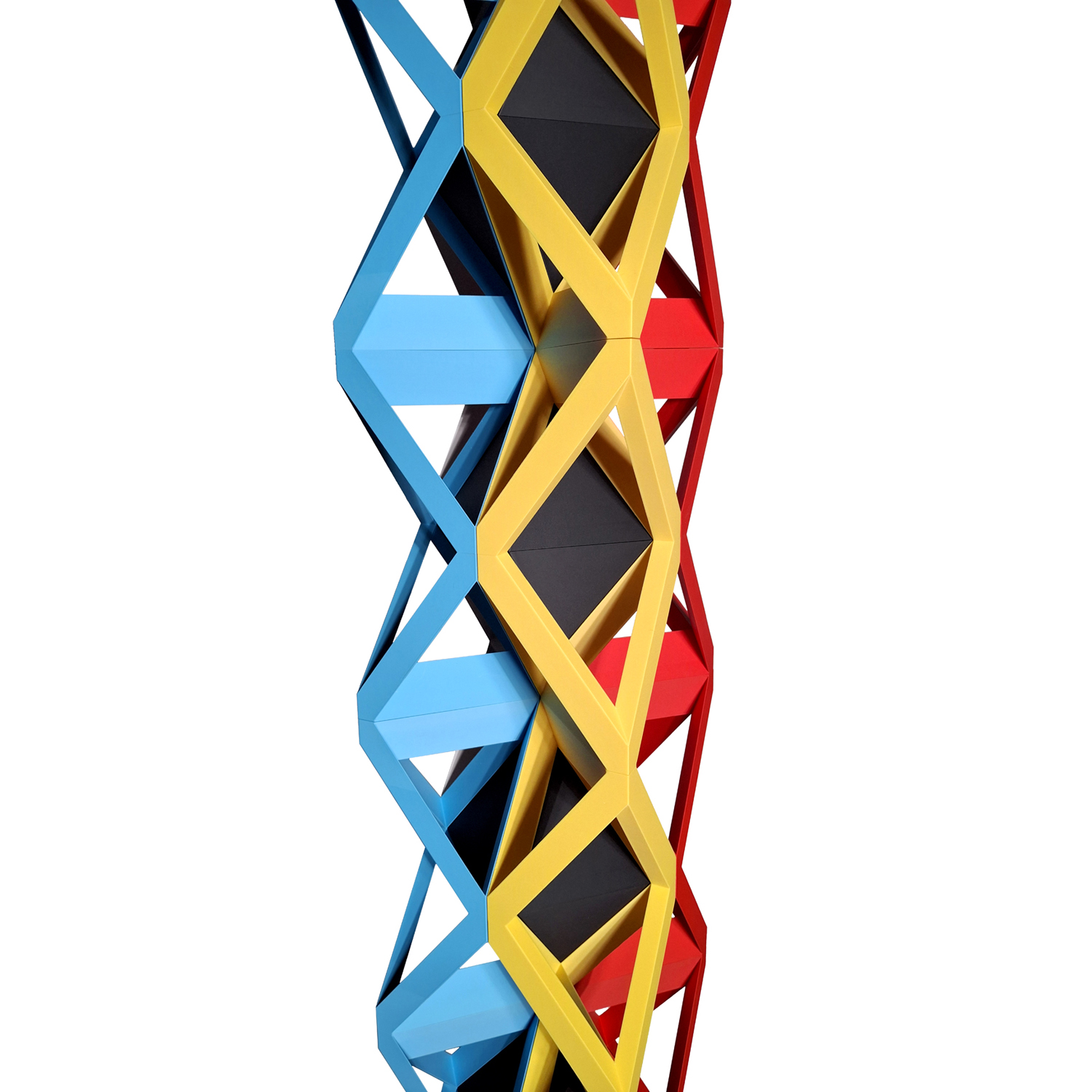
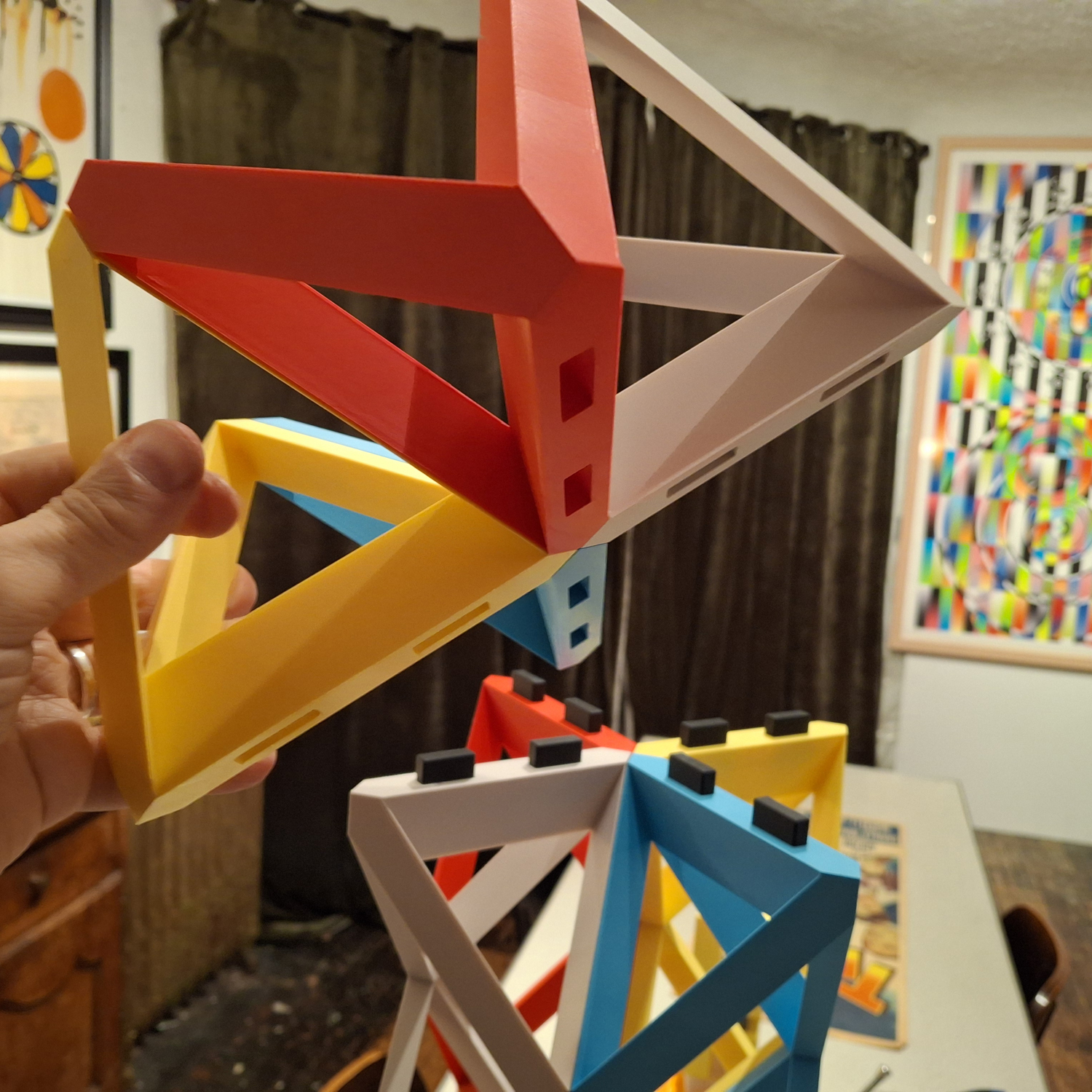
Connecting levels together
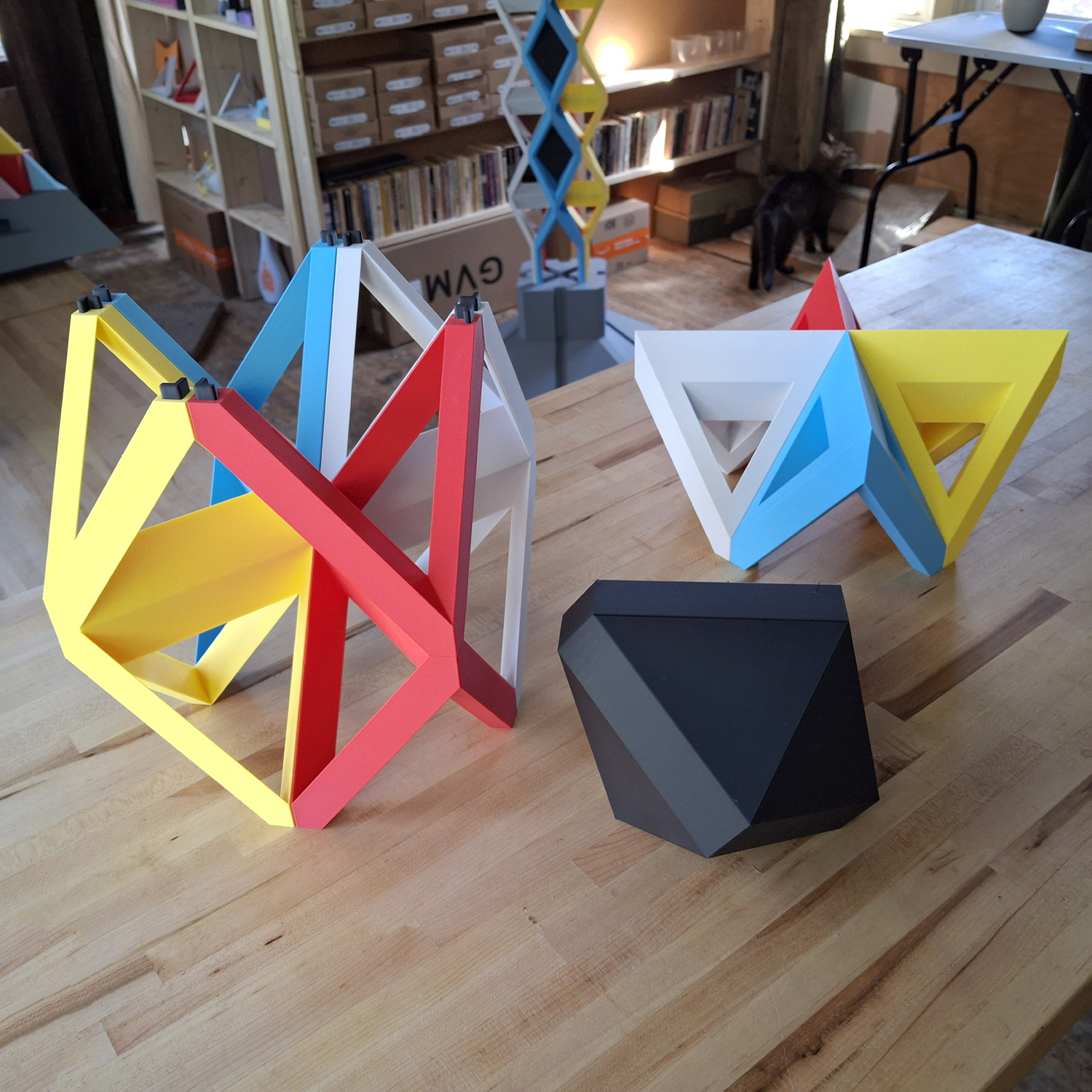
Two levels (on left), Pinnacle (on right) and Octohedron (at center)
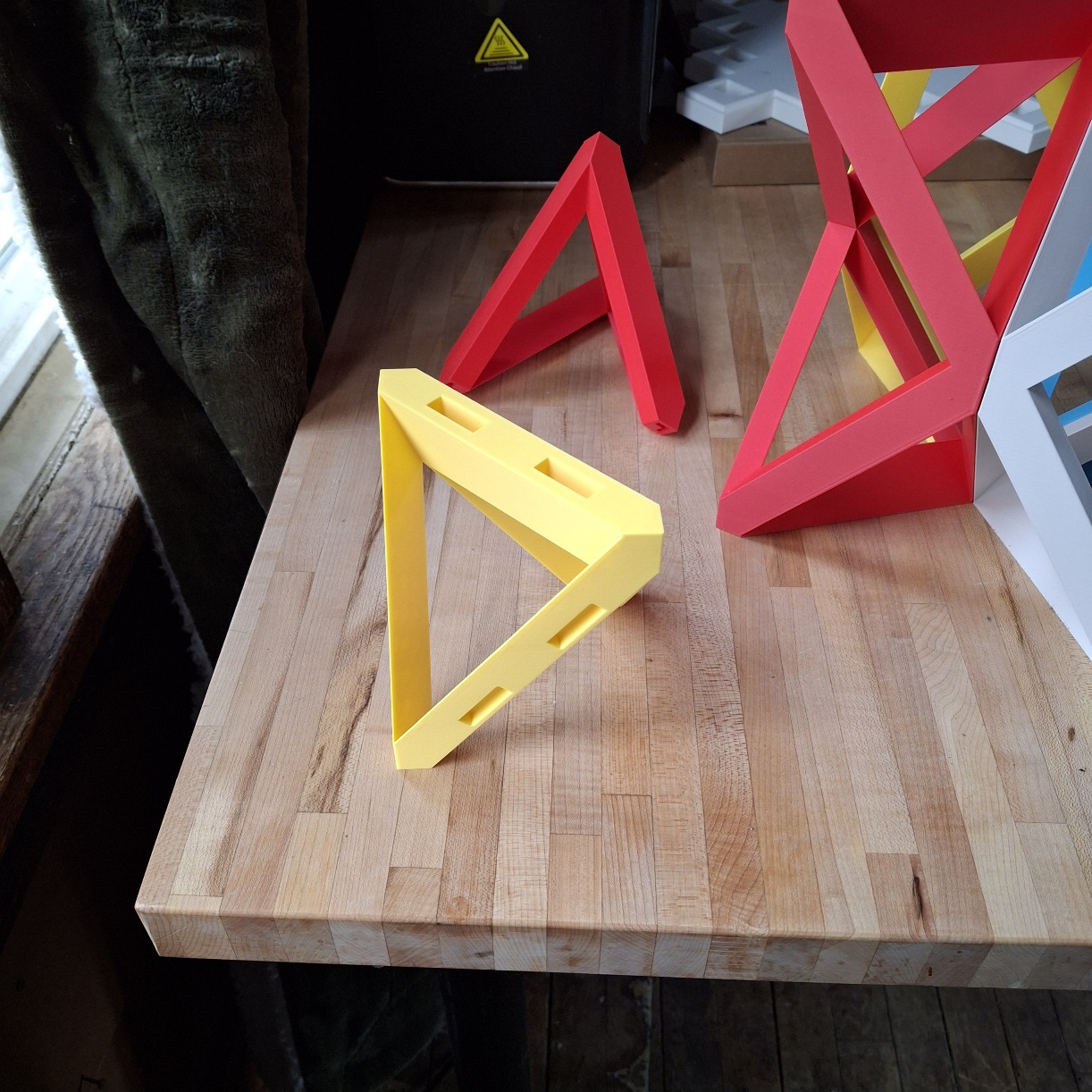
Eidos tower is modular tectonic structure. Pictured is the master module. Imagine a rhombus and then imagine it folded on itself. The recessed pockets accept connectors allowing the parts to be connected together by friction.
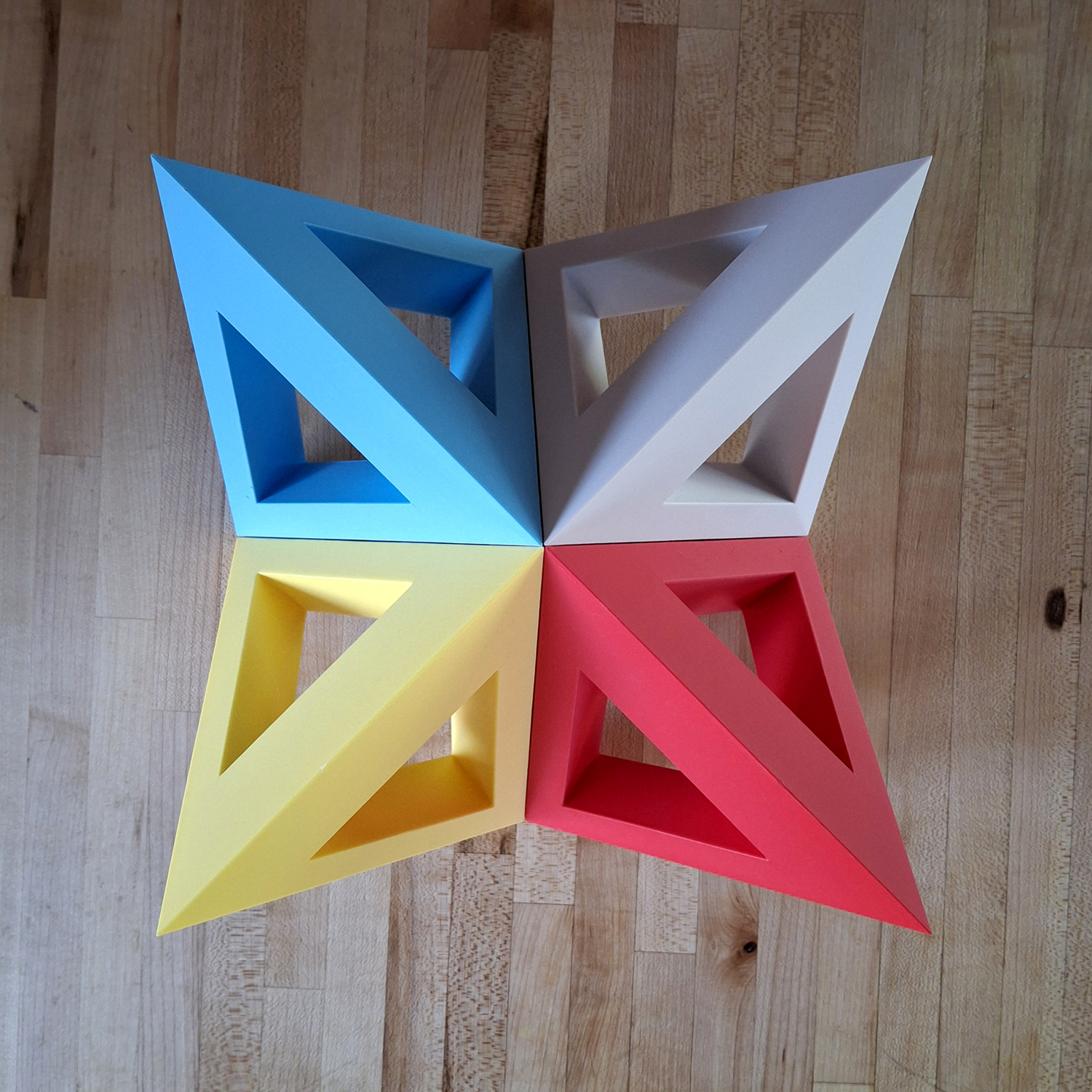
These are the parts at the top that forms the towers pinnacle.